How to protect a personal habit in a shared living space
Make room for a personal habit in a shared living space. Try a small agreement, portable materials and a fallback that respects everyone at home.
Contents
- Name the requirement rather than claiming the room
- Have the conversation before the interruption
- Make a small shared-space agreement
- Build a kit that can leave with you
- Choose a fallback that preserves the purpose
- Distinguish an ordinary clash from a recurring problem
- Track your action, not your housemates
A personal habit in a shared living space works best when the space, timing and clear-up are explicit. Choose the small action you want to practise, identify what it needs, and discuss any part that affects other people. A reading session or journal entry should not require your housemates to guess when they can use their own home.
You may share with friends, family, a partner or people you barely know. The right arrangement will differ, but the planning question is similar: how can this activity have a reliable place without turning a communal room into your permanent workspace? Start with a small agreement and a setup you can move.
Name the requirement rather than claiming the room
Describe what the habit actually needs. Writing a few lines may require a stable surface and some privacy. Sketching may need light and a place for materials. Reading may need somewhere comfortable, but not necessarily complete silence. Separate genuine requirements from preferences before asking others to change what they do.
For example, “I need the living room every evening” is a broad claim. “I would like to use this end of the table for a short drawing session twice this week” is easier to discuss. It has a location, a limited request and room for another person’s needs. Your first proposal is a conversation starter, not a rule that becomes valid because you wrote it down.
Have the conversation before the interruption
Choose an ordinary moment when nobody is already trying to use the space. Explain the activity and ask what would conflict with it. A housemate may eat later, work changing hours or need the same table for a call. Those details are useful planning information. They are not evidence that someone is preventing your progress.
The University of Bath’s guidance on living with others recommends discussing needs, agreeing shared guidelines and keeping communication open. Its advice is written for student housing. The worksheet below is our practical example for a small personal activity; it is not a tenancy agreement or a substitute for existing household rules.
Make a small shared-space agreement
Cover the beginning, the end and the fallback. A start time alone leaves an important question unanswered: when will the surface be available again? Include packing away in the period you request. If the arrangement depends on quiet, define what that means together rather than assuming everyone has the same interpretation.
| Question | Illustrative agreement | What to check |
|---|---|---|
| Where does the activity happen? | One end of the dining table | Others can still reach and use what they need |
| When does it finish? | Materials packed away before dinner preparation | The end includes clearing the surface |
| What stays in the room? | A small kit on an agreed shelf | The shelf is available and the kit fits |
| What if plans change? | Ask about another slot or use a shorter portable version | No one is expected to cancel their plans automatically |
Keep the agreement proportional to the activity. You do not need a formal meeting for every page you read. A repeated clash, however, deserves a clear conversation rather than a growing collection of frustrated reminders. Review the arrangement when schedules change, especially if an initially temporary setup starts taking over more space.
Build a kit that can leave with you
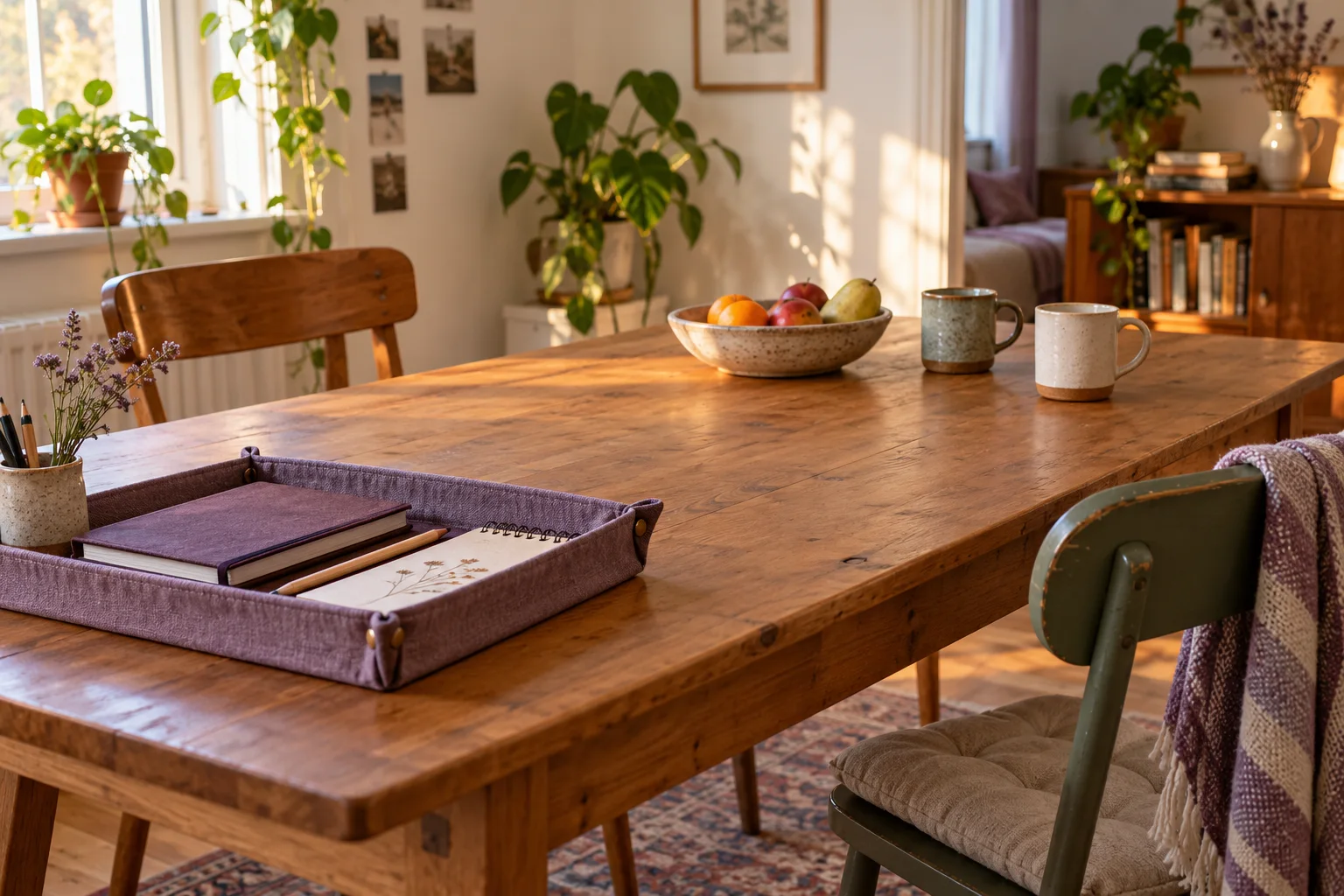
Use a container you already own for the essentials: a notebook, pencil, book or a small set of hobby materials. Keep it light enough to put away easily. A portable kit is useful because it reduces both searching and the work of restoring the room. It should not become an excuse to store a large project on someone else’s shelf.
Leave private material closed and stored appropriately. Do not assume a shared table is a private place for a journal, personal documents or an open device. If the habit involves writing sensitive thoughts, choose a suitable location or use a less personal prompt until privacy is available. The guide to starting a journal offers short prompts that you can adapt.
Choose a fallback that preserves the purpose
Imagine a fictional reader, Jordan, who plans to read at the dining table after work. A housemate unexpectedly needs the table for a family meal. Jordan can read a short section elsewhere, choose another agreed time or leave a bookmark for the next session. The fallback does not require the meal to stop or the housemate to feel responsible for a missed streak.
The alternative should still suit the activity. If your materials need a stable surface, balancing them in an unsafe place is not a useful adaptation. If reading is your goal, our reading-after-work guide can help you select a manageable session. A smaller version is an option, not an obligation to fit the activity into every available gap.
Distinguish an ordinary clash from a recurring problem
One changed plan may need only a different time. Repeated disagreement about noise, space or belongings needs a conversation about the arrangement itself. Describe the event precisely: “The table was still covered when we agreed it would be clear” is more useful than a judgement about someone’s personality. Ask what needs to change for both sides.
If the conversation becomes heated, pause and agree when to return to it. For students in managed accommodation, the relevant residence team may offer support; check your own institution’s process. A habit plan is not a way to manage intimidation or unsafe behaviour. Seek appropriate local support for those situations rather than treating them as a scheduling puzzle.
Track your action, not your housemates
After a few sessions, note whether the setup was easy to move, the agreed time worked and the activity remained worthwhile. Track what you did and what needs changing. Avoid keeping a private score of other people’s interruptions as if they were participants in your habit programme. They may support your goal without wanting their own behaviour monitored.
In PACT, you can follow your personal action and add a short journal note about the setup. The PACT app overview explains the app. Keep the household agreement in whatever form everyone actually uses. The useful result is a repeatable opportunity that respects shared space and leaves the next person able to use it too.
Updated: · Pact Editorial
Turn this step into a promise with Pact.
Choose one action today; Pact reminds you where to continue every day.